
AI visibility is whether ChatGPT, Gemini, and Perplexity know your brand exists, describe it accurately, and recommend it when a shopper asks for the best product in your category. This Q4, that recommendation will decide more holiday revenue than most line items in your media plan, and unlike every paid channel you’re about to overpay for, it still can’t be bought at auction. It has to be earned, and earning it takes weeks. Which is why the time to start was yesterday.
We know. It’s July. Everyone is at the beach. But if you’ve run holiday campaigns before, you know Q4 is won in the boring months, and there’s one channel almost nobody has in their planning doc yet.
The channel missing from your Q4 plan isn’t a channel at all
Open your media plan for this holiday season. Paid search, paid social, email, maybe affiliates, maybe CTV if you’re adventurous. Every one of those is a place where you pay to interrupt someone.
Now ask where your customers actually decided what to buy last year.
Adobe Analytics measured a 1,300% year-over-year surge in traffic arriving at US retail sites from generative AI sources during the 2024 holiday season. For the 2025 season, Adobe forecast another 520% jump on top of that. Salesforce, counting differently, credited AI with influencing 19% of all orders during Cyber Week 2024.
That’s not a niche behavior anymore. That’s a shelf. And most brands have no idea whether they’re on it.
The uncomfortable part: this shelf has no page two. When a shopper asks an assistant for “the best insulated jacket under $200,” the model names two or three brands. You’re recommended or you’re invisible. There is no position four.
Holiday shoppers already moved their research into the chat
Think about what December shopping actually looks like now. Someone’s buying for a runner, a father-in-law, a picky eight-year-old. They used to type “best gifts for runners” into Google and click through ten listicles. Now they describe the whole person to an assistant and get a shortlist in one answer.
The behavior fits the season perfectly. Holiday buyers are researching harder than at any other time of year, comparing more, and working from budgets and lists. An assistant that holds the whole conversation — budget, recipient, shipping deadline — is simply a better tool for that job than ten open tabs.
- 1,300% YoY growth in AI-sourced retail traffic, holiday 2024 (Adobe Analytics)
- 520% further growth forecast by Adobe for holiday 2025
- 4.4x the conversion rate of organic search for AI-referred visitors
- 19% of Cyber Week 2024 orders influenced by AI (Salesforce)
And the traffic that does click through is not idle browsing. AI-referred visitors convert at about 4.4x the rate of organic search traffic, because by the time the assistant sends someone to you, the comparison shopping already happened inside the conversation. You’re not receiving a researcher. You’re receiving a decision.
Meanwhile the channel you’re comparing it against is shrinking on the other end: 60-70% of searches now end without a click at all. Your page-one ranking is increasingly a citation in someone else’s answer.
Why AI visibility is underpriced, and why it won’t stay that way
Here’s the part your CFO will appreciate.
Every Q4, holiday CPMs on paid search and social spike — industry benchmarks put the jump at as much as 66% into Cyber Week — because every mature DTC brand is bidding on the same finite attention at the same time. It’s an auction, and auctions during peak demand have exactly one direction.
AI visibility doesn’t work like that. Today, what determines whether a model recommends you is not a bid. It’s whether your product data is machine-readable, whether your feed is in the right places, whether the model’s picture of your brand is accurate and current. That’s work, not spend. Fixed cost, not auction dynamics.
| Paid search / social in Q4 | AI visibility | |
|---|---|---|
| Price mechanism | Auction, peaks with demand | Data and content work, flat |
| What Dec 26 looks like | Impressions stop with the budget | Recommendations keep compounding |
| Competition | Every DTC brand, same keywords | 65% of retailers haven’t started |
| Conversion quality | Interrupted scroller | Pre-decided buyer at 4.4x organic |
The compounding row is the one that matters for the “long term” conversation. A paid impression is gone the moment the budget ends. But once a model has an accurate, structured picture of your catalog, it keeps recommending you in January, in March, next Q4. The same fix serves every future conversation.
Every dollar you put into a Q4 auction dies at midnight on Cyber Monday. The work that makes an AI recommend you is still working next year.
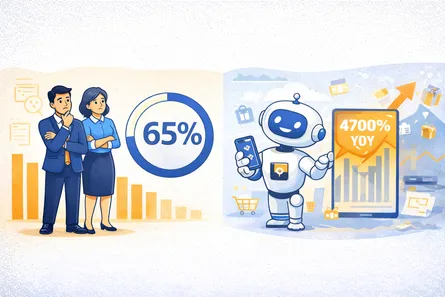
And the competitive math is unusually kind right now: about 65% of retailers aren’t agent-ready in any meaningful sense. In most categories, the AI shelf still has empty slots. That is not a sentence anyone will be able to write about Google’s page one, and it won’t be true of the AI shelf for long either.
Ads are coming to the answer box, and early movers set the baseline
If “underpriced” sounds temporary, that’s because it is.
Perplexity has sold sponsored placements since late 2024. OpenAI has confirmed that ads are coming to ChatGPT. The auction is being built right now, and when it opens, AI surfaces will get their own version of Q4 CPM inflation.
But here’s what a decade of paid search taught everyone: ads layered on top of a relevance system reward the brands the system already trusts. Quality score was never a coincidence. When you can buy placement in AI answers, the brands with accurate structured data, a clean feed, and an established presence in the model’s picture of the category will pay less for better slots. The brands starting from zero will fund the gap.
So the investment case isn’t “organic AI visibility instead of ads.” It’s that organic visibility is the position you buy ads from. Build it while it’s earned and cheap; spend on it later from strength instead of desperation.
The recommendation is the new shelf, and checkout is moving in next door
There’s one more reason this stopped being a nice-to-have: the distance between “recommended” and “purchased” is collapsing.
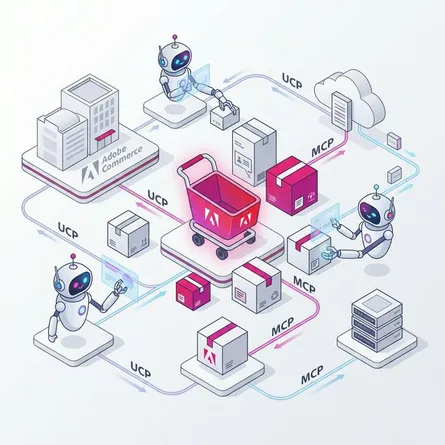
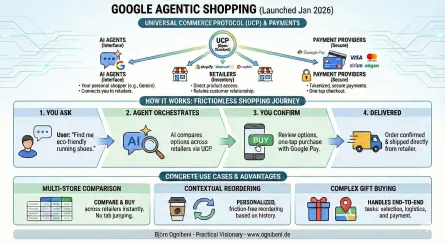
With ChatGPT Shopping and the OpenAI product feed, a shopper can go from question to recommendation to checkout without leaving the conversation. Agentic checkout protocols are doing the same thing across other surfaces. The assistant isn’t just the research tool anymore; it’s becoming the point of sale.
Which changes what an impression is worth. A brand mention in an AI answer used to be top-of-funnel. Increasingly it’s the whole funnel, compressed into one conversation happening on the couch, two weeks before Christmas, with a credit card already on file.
If your products aren’t in the feeds and your data isn’t structured for agents, you’re not losing an impression. You’re losing the sale, silently, to whichever competitor did the homework.
You don’t need an agency or six figures to start
The good news, and it’s genuinely good: this is the cheapest acquisition work you’ll do all year.
There’s no minimum spend, because there’s no spend. The inputs are your own product data, a feed submission, structured markup, and content that answers the questions shoppers actually ask assistants. The GEO playbook is documented, and most of it is executable by the team you already have.
The honest cost is time. Not your time in hours so much as the calendar: models refresh their picture of your brand on crawl and retraining cycles you don’t control. Changes you make in August are reliably reflected by November. Changes you make in November are reflected in time for Valentine’s Day.
That’s the whole argument for starting now, in the boring months, while your competitors are still at the beach.
Three tips if you’re doing this before Q4
Start with the audit, not the tactics. Ask ChatGPT, Gemini, and Perplexity what your brand does, what you sell, and who they’d recommend in your category. Write down every error and every absence. That delta is your work list, and it costs one afternoon.
Fix the source material before you touch content. Feed first, schema second, blog posts third. Models recommend from structured product data; a brilliant gift guide can’t compensate for a catalog the agent can’t parse, and a clean feed pays off across every AI surface at once.
Be in place before the Cyber 5. The biggest shopping window of the year is the five days from Thanksgiving to Cyber Monday. If your first visibility work ships that week, you’ve missed the crawl cycles that matter. Ship by early October, re-run the audit monthly, and walk into peak season already on the shelf.
Frequently Asked Questions
Is it too late to start AI visibility work for this Q4?
No, but the window is real. Models pick up changes to feeds and structured data over weeks to a couple of months, so work shipped by early October is reliably reflected during peak season. Work shipped in late November mostly benefits next year.
Can I just buy ads in ChatGPT instead of doing the organic work?
Not yet at scale, and when you can, you won’t want to skip the organic work. Perplexity sells placements today and OpenAI has confirmed ads are coming to ChatGPT, but ad systems built on relevance engines consistently favor brands the underlying model already understands. Organic AI visibility is what you’ll bid from.
How is this different from the SEO we already pay for?
SEO earns you a ranked position on a results page a human scrolls; AI visibility earns you a place in the two or three brands a model actually recommends, with no page two. The inputs overlap but aren’t identical: AI visibility leans much harder on structured product data, feeds, and machine-readable accuracy than on backlinks and keywords.
How do I measure whether it’s working?
Three signals: ask the major assistants your category questions monthly and track whether you appear; watch AI referral sources and your direct-traffic anomalies in analytics; and compare conversion rates of AI-referred sessions against organic. If agents can also complete a checkout on your store, measure that funnel separately.
Want your store on the AI shelf before the Cyber 5? Run the free Readiness Audit to see exactly what agents find today, or talk to us about getting there by October.