
For fifteen years, the e-commerce playbook has remained unchanged: optimize your product pages, generate backlinks, manipulate technical architecture, and fight for the top organic spot on Google.
But what do you do when the user never clicks that #1 spot?
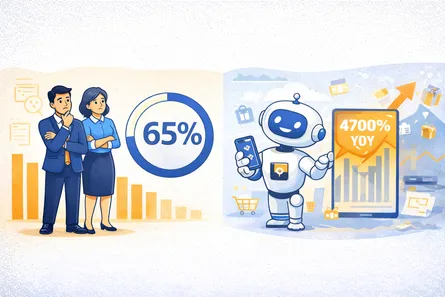
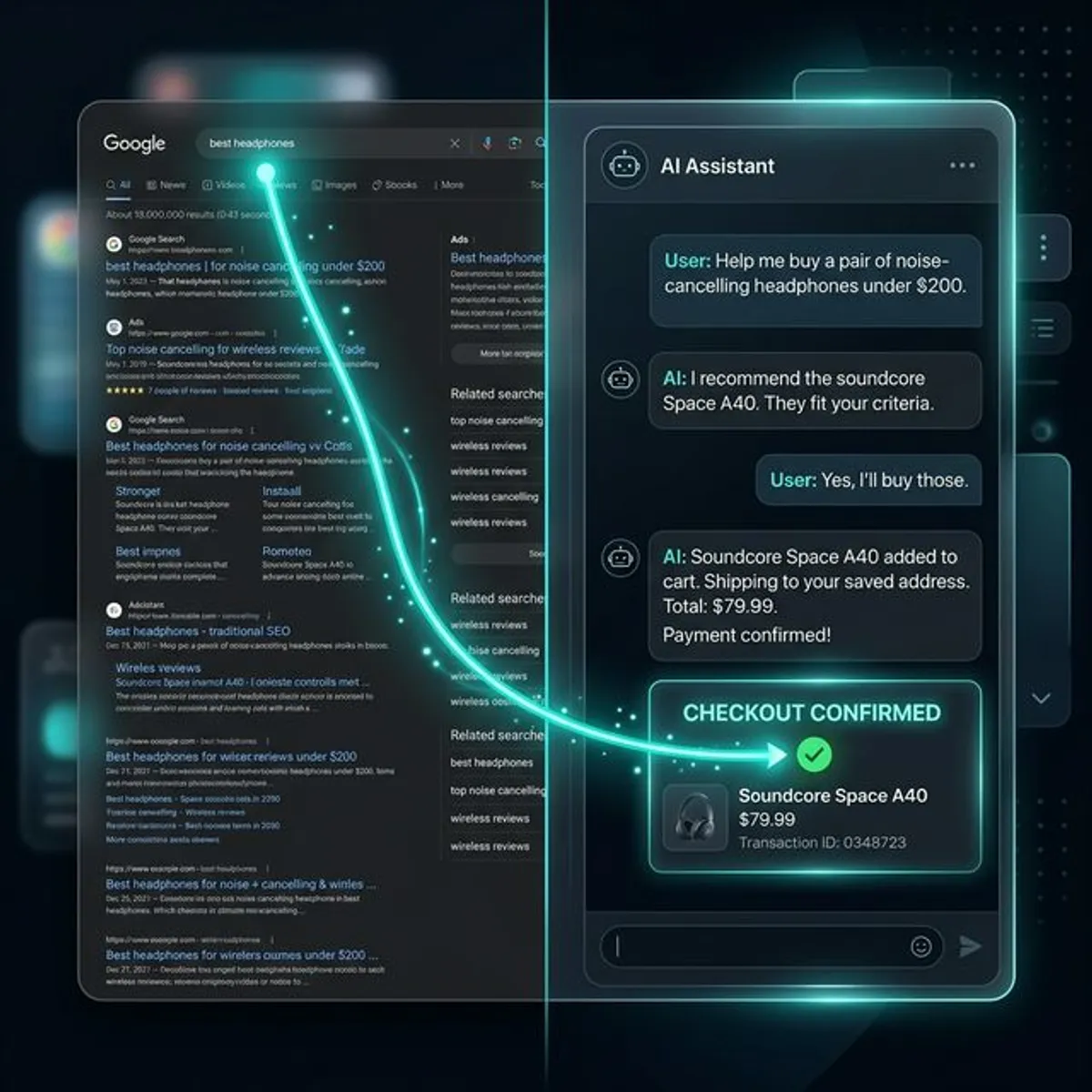
Welcome to the era of zero-click search. Today, shoppers are asking AI assistants like Perplexity or Google’s Gemini to do the heavy lifting. The AI summarizes reviews, compares specs, and outputs a clean answer directly in the chat interface. Your website traffic drops, but the searches are still happening.
Here is why your Traditional SEO strategy is failing, and why transitioning to an Agentic Storefront is the only viable path forward.
The Death of the Eyeball Economy
Traditional SEO relies on human eyeballs. It requires a consumer to physically visit your domain, look at your branding, navigate your menus, and organically stumble across upsells.
Because of this, SEO strategy dictates that you create vast arrays of “Top of Funnel” content—blogs, buying guides, and comparison pages—hoping to catch a user in the research phase and slowly nurture them.

How Agentic Optimization Differs from SEO
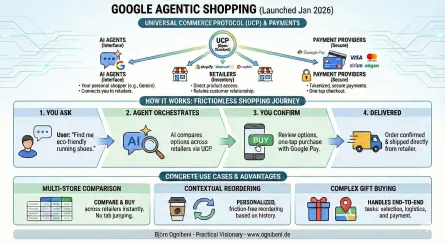
If SEO is about getting a human to click a blue link, Agentic Optimization is about getting a machine to execute an API call.
1. Keywords vs. Data Precision
- SEO: You obsess over long-tail keywords (“best running shoes for flat feet 2026”).
- Agentic: You obsess over precise, structured attribute mapping. If your JSON feed doesn’t definitively list “arch support” as an attribute, the LLM will skip your product entirely.
2. Dwell Time vs. Latency
- SEO: You want users to stay on your page as long as possible (dwell time) to prove to Google your content is valuable.
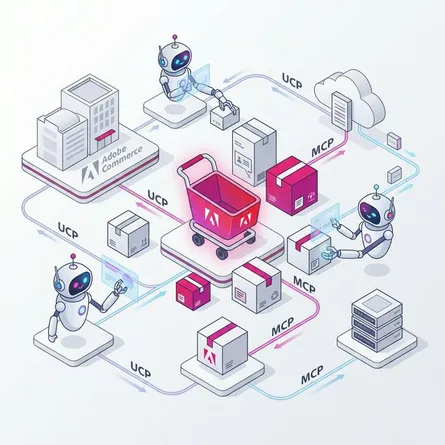
- Agentic: Agents despise latency. If your UCP payload takes more than 500ms to return an inventory count, the agent assumes a timeout and moves to your competitor instantly.
3. Links vs. Transactability
- SEO: Your authority is judged by how many referring domains link to your site.
- Agentic: Your authority is increasingly judged by your verifiable transactability. Can the agent complete a checkout securely? AI platforms penalize storefronts that offer broken or highly frictional bot-checkout flows because it ruins the user experience in the chat window.
Stop Optimizing for Clicks
We are entering a phase where the metric “Monthly Unique Visitors” is decoupling from “Monthly Revenue.”
You will soon see highly profitable merchants with incredibly low website traffic, simply because an Agentic Storefront handles the majority of its volume via API calls from AI assistants.
To survive the zero-click era, you have to stop fighting for human clicks and start building the infrastructure for machine transactions.