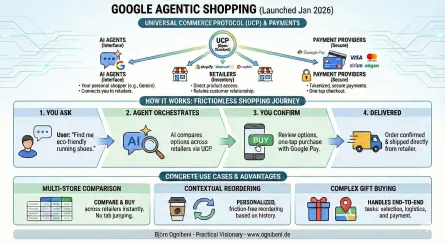

We know the theory: AI shopping agents are responsible for the fastest-growing segment of e-commerce traffic. They don’t want your beautiful CSS; they want your structured data and your checkout APIs.
But how do you actually turn your massive, complex legacy platform into a sleek, AI-readable Agentic Storefront?
Whether you are running Salesforce Commerce Cloud, Adobe Commerce, or a custom headless stack, the transition requires three distinct phases.

Phase 1: Solving the Visibility Gap
Before an AI agent can buy from you, it has to know what you sell. Traditional HTML tags aren’t enough.
Action Steps:
- Audit Your Structured Data: Ensure every product page implements comprehensive Schema.org JSON-LD. Agents still pull from search indices as a fallback.
- Expose Real-Time Feeds: Build high-performance, paginated JSON feeds of your catalog.
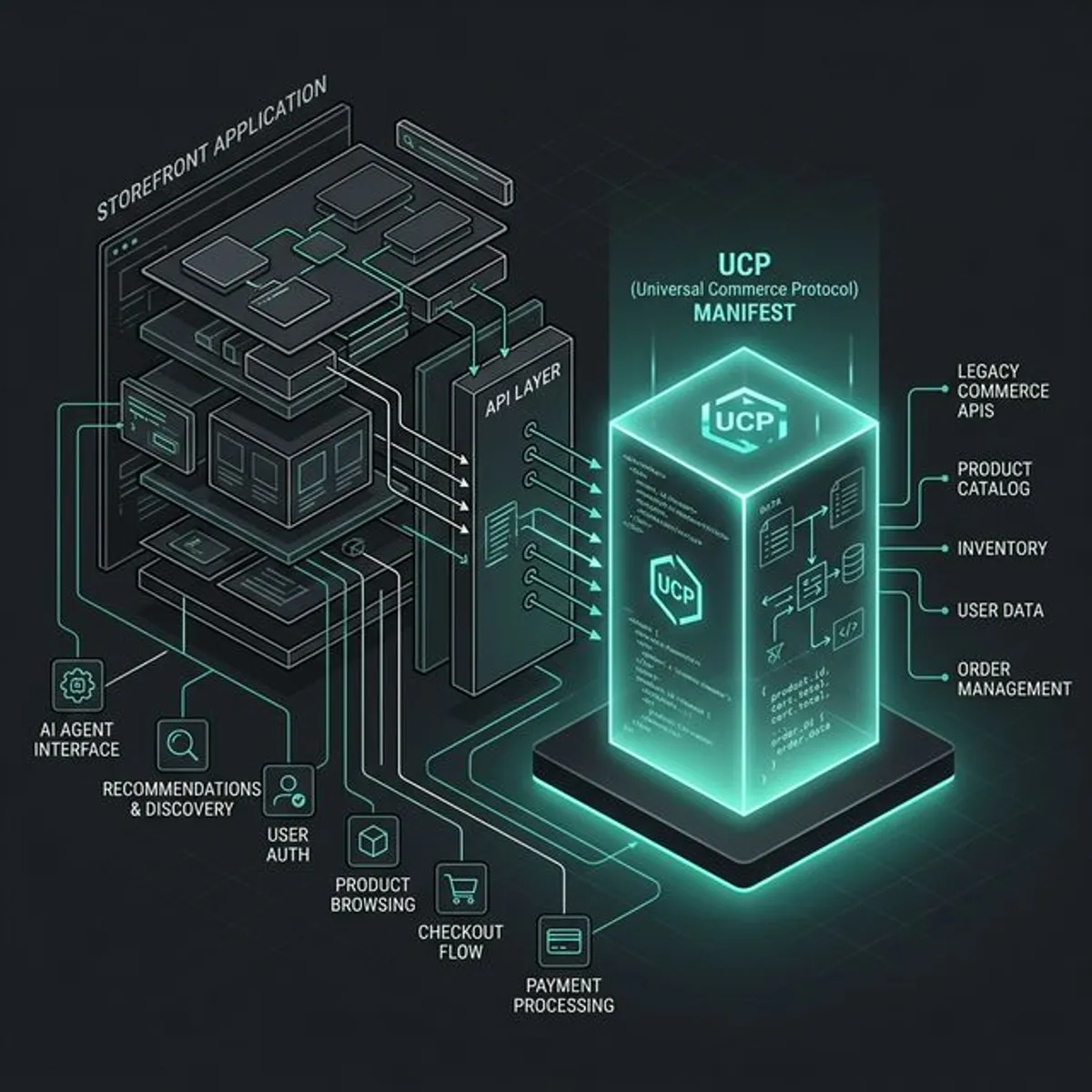
- Establish Your Manifest: Create a
/.well-known/ucpdocument. This simple JSON file is the front door for AI agents. It tells them your store’s name, capabilities, and where to find your catalog endpoints.
Phase 2: Implementing the Universal Commerce Protocol (UCP)
To become a true Agentic Storefront, you must authorize AI to transact on the buyer’s behalf. This is where the Universal Commerce Protocol (UCP) comes into play.
UCP is an open standard that gives agents a predictable set of actions: creating a cart, calculating taxes, adding shipping details, and processing payments.
sequenceDiagram
  Agent->>Store: Create checkout_session
  Agent->>Store: Add shipping details
  Store-->>Agent: Tax + shipping totals
  Agent->>Store: Payment token
  Store->>PSP: Process payment
  Store-->>Agent: Order confirmed
The UCP checkout loop: a session holds cart state, totals come back in real time, and a payment token flows securely to your PSP.
Action Steps:
- Build the Session API: Develop an endpoint that allows an agent to create a
checkout_session. The session must hold cart state securely. - Handle Dynamic Calculations: Agents need immediate feedback on tax and shipping before they can confirm the purchase. Your UCP layer must calculate this on the fly without human interaction.
- Map the Payment Flow: UCP defines standard contracts for passing payment tokens from the AI environment securely to your PSP (Payment Service Provider).
Phase 3: Platform Upgrades & Cartridges
Building UCP from scratch is a heavy lift for enterprise merchants. The smartest engineering teams aren’t reinventing the wheel; they are leveraging pre-built translation layers.
If you are on Shopify Plus: You are sitting on native support. Your primary job is configuration and auditing your inventory feeds.
If you are on Salesforce Commerce Cloud (SFCC): ForkPoint has open-sourced the first UCP Cartridge for SFCC. Rather than building custom middleware, you can install the cartridge to map SFCC’s native checkout pipelines to the UCP standard.
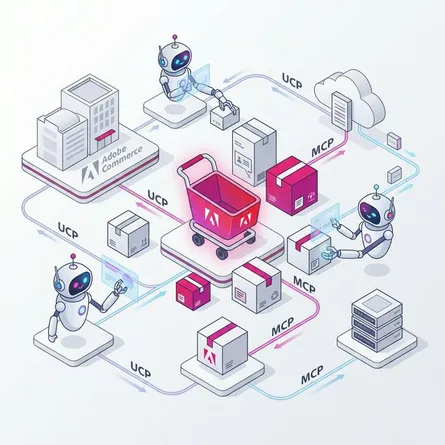
If you are on Adobe Commerce: Similar architectural patterns apply. You will need an extension that exposes GraphQL or REST API wrappers translating Adobe’s cart logic into UCP JSON responses.
The Payoff
Upgrading to an Agentic Storefront is less about “re-platforming” and more about “re-wiring.”
By exposing the heavy lifting your backend already does (pricing, inventory, tax, checkout) via a standardized protocol, you instantly open your business to the most revolutionary commerce channel of the decade.