
Markdown has quickly become the lingua franca for autonomous agents and AI systems. Unlike humans who browse fully rendered HTML pages with CSS and heavy Javascript payloads, AI agents struggle to parse complex DOM trees efficiently. The explicit, clean structure of Markdown makes it ideal for AI processing—providing better extraction results while simultaneously minimizing costly token waste.
Recognizing this shift in how the web is consumed, Cloudflare has introduced Markdown for Agents. This feature allows AI systems to request website content directly formatted as Markdown, converting HTML on the fly at the edge.
How Markdown for Agents Works
Cloudflare’s global network supports real-time content conversion using standard HTTP content negotiation.
When an AI system requests a page from a Cloudflare-enabled website that has this feature turned on, the agent simply needs to express its preference by adding an Accept header to the request:
Accept: text/markdownCloudflare intercepts this request, fetches the original HTML version from the origin server, and efficiently converts it to Markdown before serving the clean response back to the client.
sequenceDiagram
  Agent->>Cloudflare: GET /page (Accept: text/markdown)
  Cloudflare->>Origin: Fetch original HTML
  Origin-->>Cloudflare: HTML page
  Cloudflare-->>Agent: Markdown + x-markdown-tokens
Content negotiation at the Cloudflare edge: HTML in from the origin, clean Markdown out to the agent.
Key Technical Features
If you are building an AI agent or optimizing your site for AI discoverability, there are two crucial headers Cloudflare includes in these Markdown responses:
1. Token Estimation (x-markdown-tokens)
Cloudflare automatically calculates and injects an x-markdown-tokens header into the response. This indicates the estimated number of tokens in the converted markdown document.
Engineering teams building AI agents can use this value dynamically in their flows—for instance, to calculate context window usage on the fly or to decide whether a chunking and embedding strategy is necessary before passing the content to an LLM.
2. Usage Permissions (Content-Signal)
By default, converted responses include a Content Signals policy framework header. It looks like this:
Content-Signal: ai-train=yes, search=yes, ai-input=yesThis acts as a transparent contract detailing how the content may be used, specifically signaling that the content is permitted for AI Training, traditional indexing for Search, and processing as AI Input (including agentic use cases).
Why This Matters for Agentic Commerce
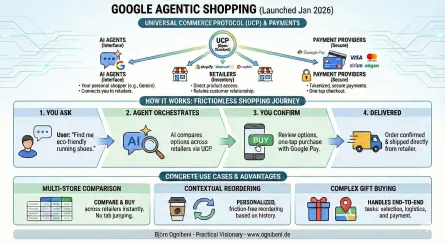
As we transition into the era of the agent economy, ensuring your storefront’s products and catalog data are easily readable by AI is paramount—a strategy known as GEO (Generative Engine Optimization).
Traditionally, agents scraping e-commerce sites have to download massive HTML files, parse through nested <div> tags, strip out navigation headers and footers, and attempt to isolate the core product details. This process is brittle; a simple UI update can easily break an agent’s scraping logic.
By serving structured Markdown directly from the CDN edge:
- You eliminate parsing errors. The agent gets the exact product title, description, and specifications formatted perfectly with clear heading tags (
#) and lists (-). - You reduce bandwidth and token costs. Markdown strips away styling and scripts. Smaller payloads mean faster agent ingestion and significantly cheaper API calls to LLMs.
- You improve AI discovery. Agents are more likely to successfully index and recommend products that are easy for them to “read” accurately.
Availability
At ForkPoint, we help brands optimize their infrastructure for the Agent Economy. Want to learn how prepared your storefront is for AI shoppers? Take our Readiness Assessment.