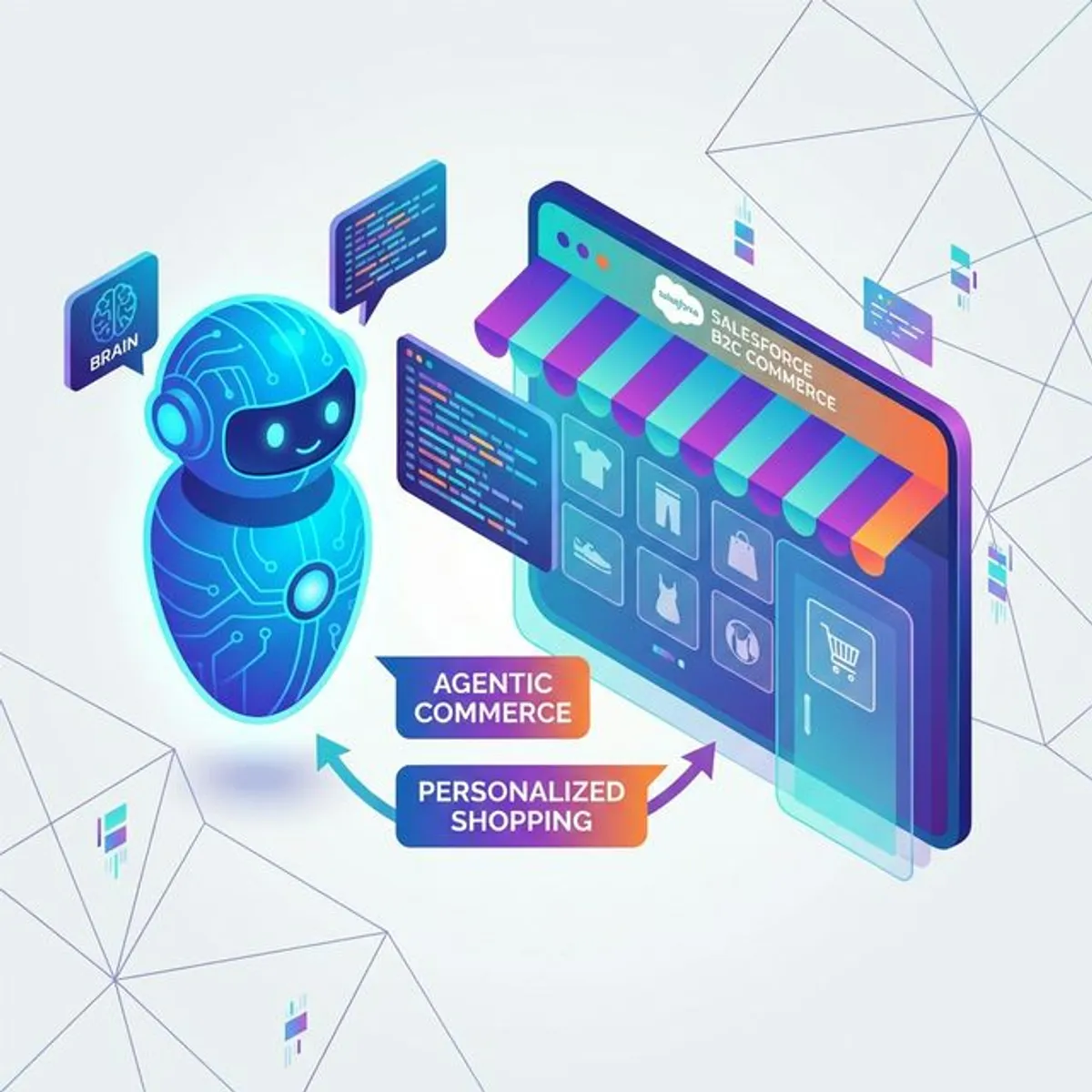

Salesforce Spring ‘26 introduces native agentic commerce support in Agentforce Commerce, including Universal Commerce Protocol (UCP) integration, AI-powered shopping agents, and autonomous checkout capabilities. For B2C merchants on Salesforce Commerce Cloud, this is the most significant platform shift since the move to headless commerce.
Here is a breakdown of the most significant announcements and what they mean for B2C merchants.
Agentic Shopping Takes Center Stage
Shoppers no longer want to hunt through static websites using rigid keyword searches. They expect highly contextual, conversational experiences. Salesforce’s new agentic shopping features are designed to meet this expectation:
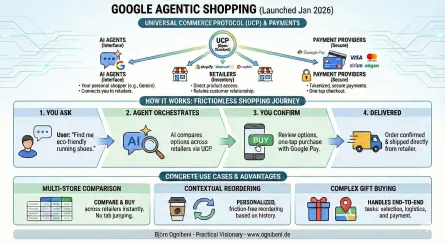
Google’s Universal Commerce Protocol (UCP) Integration: This is perhaps the most significant structural update. Salesforce is enabling native checkout and direct buying experiences on Google AI commerce surfaces. This validates the importance of UCP as the emerging standard for agentic discovery and transaction.
ChatGPT Catalog Integration: Merchants can now publish structured product feeds directly to OpenAI without writing custom code. This allows ChatGPT to accurately recommend and display products, turning the AI assistant into a highly qualified traffic and discovery engine.
Guided Shopping Agent: On-site, the Guided Shopper Agent uses store context to help shoppers refine results intelligently, offering smart alternatives for zero-result queries to prevent dead ends.
Empowering Merchandisers with Agentic Actions
The shift to agentic commerce isn’t just about the shopper; it’s also about dramatically improving backend efficiency.
Agentic Boost and Bury: Merchandisers can now deploy AI agents to instantly promote high-margin or trending items, while automatically burying slow-moving or out-of-stock products. This replaces manual, rule-based merchandising with dynamic, intent-driven catalog management.
Embedded Analytics and Workspaces: Business Manager now offers highly personalized workspaces where merchandisers can leverage agents with a single click, instantly understanding the context and impact of visual merchandising or campaign performance.
Contextual Search
The keyword era is ending. Salesforce is introducing Contextual Search, which moves beyond literal word matching to semantic understanding.
This means the search engine understands natural language, intent, and shopper context (like location or season). For example, a search for a “lightweight jacket” can intelligently return windbreakers and mild weather accessories based on the shopper’s recent history, rather than just returning items explicitly tagged as “jackets.”
The Takeaway: Agentic Readiness is Non-Negotiable
Salesforce’s robust roadmap for Agentforce Commerce sends a clear signal to the market: agentic commerce is not a future concept; it is the current battleground for customer acquisition and conversion.
The native integration of Google’s Universal Commerce Protocol and direct feed connections to ChatGPT mean that the platforms themselves are preparing for a world where AI agents do the shopping on behalf of the consumer.
The competitive window is open. Brands that prepare their data and embrace these agentic capabilities early will capture the initial wave of AI-driven commerce.
Want to prepare your storefront for the agentic era? Speak with our team about an implementation roadmap and how to get your catalog ready for AI discovery.